Quick answer
Lake Ashi cruise duration ranges from 25 to 35 minutes for a single one-way leg, depending on which ports you travel between.
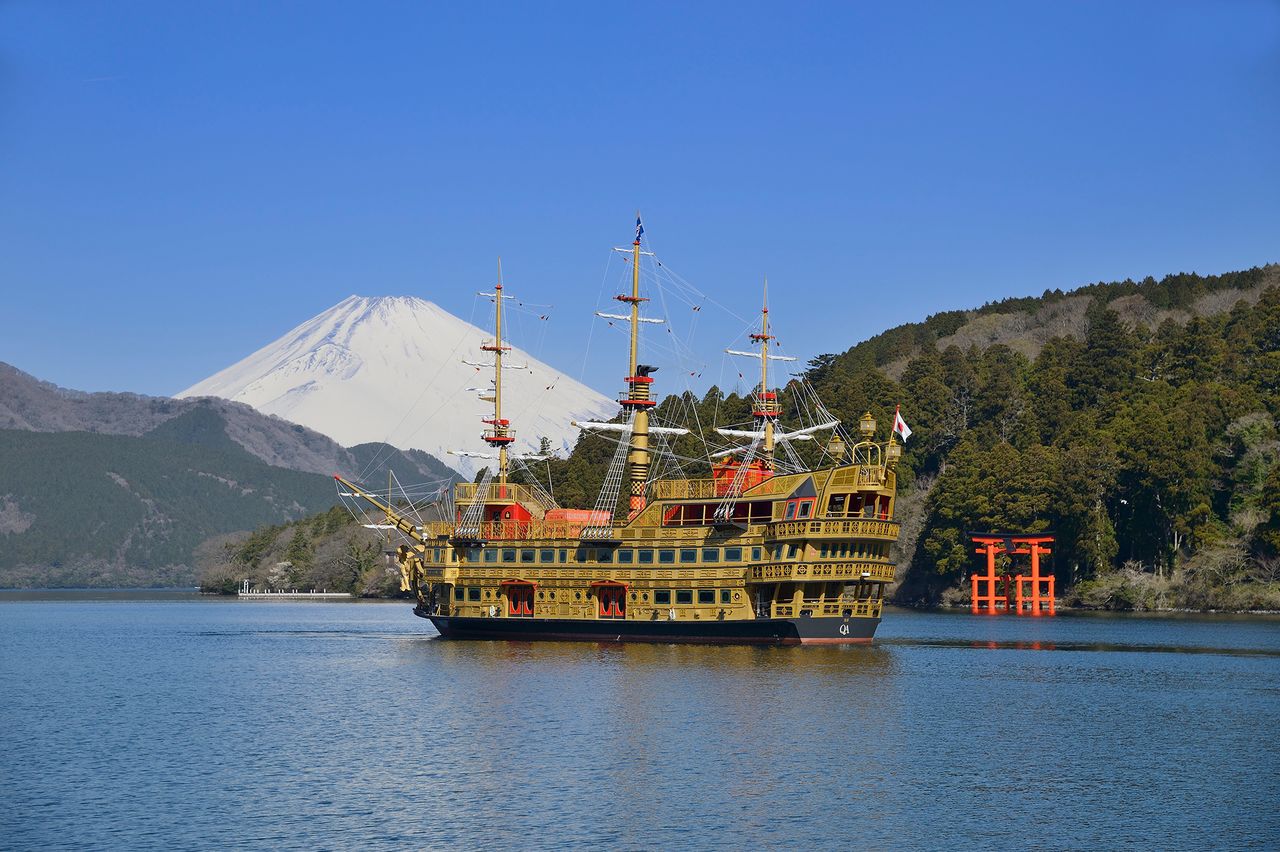
The crimson-hulled replica warships that cross Lake Ashi cover roughly 19 kilometers of open water, yet no single voyage spans the lake's full length. Each leg requires a different slice of time, and the lake ashi cruise duration for your journey depends entirely on which two points you need to connect. Service frequency holds steady throughout the day, with vessels leaving each port at intervals timed to match ropeway arrivals and bus schedules. The 1,700 yen one-way fare covers any single leg, and travelers planning a round-trip loop should account for the cumulative sailing time plus dwell periods at each port. Weather conditions—particularly morning fog and autumn winds—can delay departures but rarely alter the fundamental routing. The adult fare applies uniformly across all three routes. That circuit, accounting for transfers and brief stops, spans three to four hours. The lake crossing itself remains the calm center of that loop, a half-hour interlude framed by forested slopes and, on clear mornings, the symmetrical cone of Mount Fuji suspended above the western shore.
Planning Your Lake Ashi Cruise Duration and Route
Arrive at Togendai Port
Reach the pier early to secure a good boarding position and check the departure board for your ship. Allow 15 minutes before departure.
Board the Pirate Ship
Choose between the open upper deck for Mt. Fuji views or the enclosed cabin if weather is poor.
The gate is a 5-minute walk along the shore.
Walk inland from the torii to reach the main shrine complex. Plan 30–45 minutes to visit the grounds and take photos.
This segment offers forest views and access to the checkpoint museum if time permits.
Lunch Near the Port
The area has limited dining, so arrive before the midday rush.
The Best Time for a Lake Ashi Cruise Duration Experience
The best arrival window for your cruise is 09:00–16:30, as this period offers better visibility for Mt. Fuji and reduces the likelihood of weather-related delays. Planning your trip during this window helps ensure more consistent operation across the lake.
Spring (April-May)
Moderate crowds; peak season activity.Mild, 10°C–20°C; clear skies frequent.
Spring provides stable conditions for viewing Mt. Fuji. Mornings remain the most reliable time to avoid clouds.
Autumn (October-November)
Moderate to high; foliage season.Cool, 10°C–18°C; crisp air improves visibility.
Clear autumn days often feature high visibility for distant mountain peaks. Prioritize early departures for the calmest water.
Weekday mornings
Low to moderate.—
Arriving at 09:00 minimizes wait times. Mid-week schedules are generally less impacted by larger tour groups.
Verdict: The best time to visit is mid-week during April or October, arriving at 09:00 to maximize visibility and scheduling reliability.
Check availability
Frequently asked questions about lake ashi cruise duration
Everything you need to know about lake ashi cruise duration